On Friday I was invited to speak with Fiber/Textile/Fashion students as an alumna from the Fibers program.
It had been almost three years since I left Syracuse and returning was like coming home. It even flurried- the day after an 80 degree day, which I took as a kind traditional welcome! It was so lovely to see my weaving teacher, Sarah, again and to meet the other professors, Janet and Olivia, and two of the majors. The program seems to be flourishing with a joined vision of fine art fibers, craft, and textile industry practices. The number of majors has more than tripled to 10 since I left, which I imagine gives everyone even more discussion and collaboration opportunities!

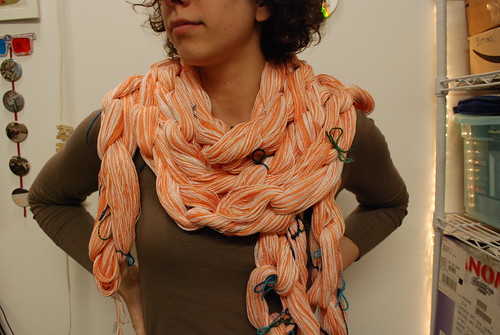
While I was nervous to speak, (I am always working on my fears of public speaking) it went very well. I hope I was able to articulate my current circumstances and experiences in a way that would be helpful to current students looking toward the “real world,” for showing similarities, contrast and comparison. I feel that I am straddling much of the fiber/textile world, as I am working in a garment company in the fashion industry, creating a line of scarves for sale on the retail/craft side of things, and working on a body of art work that will hopefully allow me to show in galleries and gain entry into a graduate program. While it is a lot of work, I love to have my hands in just about everything. There is so much to learn in this world: I have a renaissance (wo)man dream.
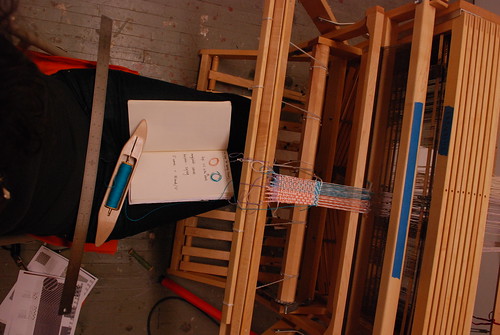
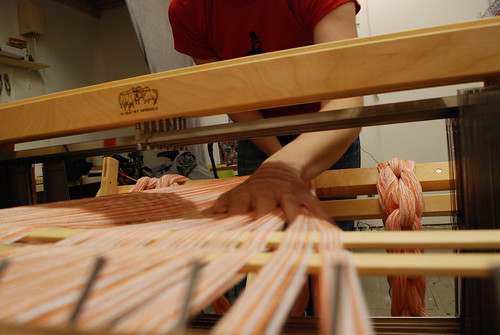
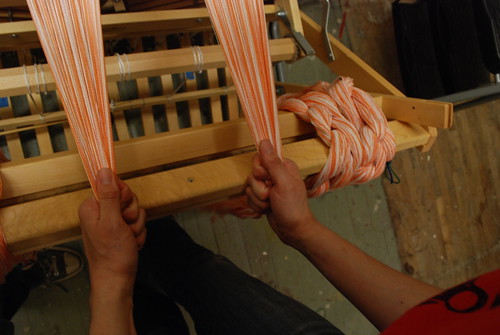
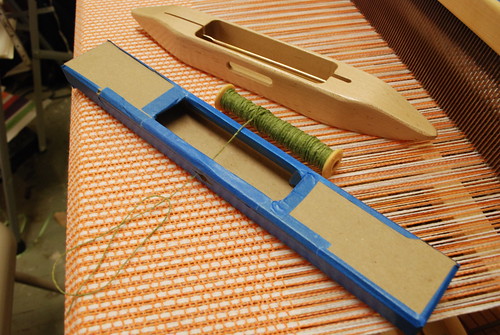
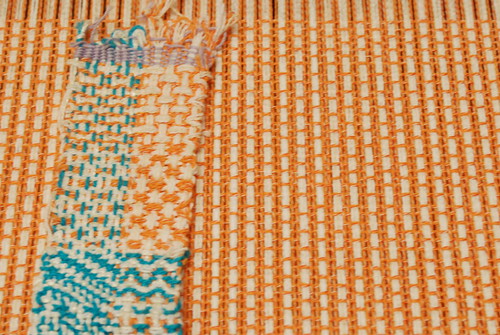
During the presentation, I talked about the things I wish I knew- what I would have liked to know before graduating (and some that are still on my list of things to learn). I kept it simple and left out useless regret, focusing on classes and computer programs I think would be helpful in job searching and keeping on top of today’s technology. I was asked what I felt was the most useful in my learning at SU. I answered weaving and explained how it supports my knowledge in my current job and my dreams of self employment, but coming back to this question in my head, ALL of my education was helpful, and will continue to be helpful in my life. There is nothing that I would leave behind. If it is not in use now, it will be filed away in my head for another time and place. All knowledge informs and inspires all parts of life, even seemingly unrelated aspects.
Syracuse is a particular city: populous with 147,000 people, but the city center is struggling to act as a weighted downtown. It has its class and race issues, like any city, but the city infrastructure and geography, like the building of 81 in the 1950's and Syracuse University (also the city's largest employer) being on top of a hill apart from the rest of the city has not helped matters. Despite these issues, it is the heart of Central New York: a city in the midst of countryside, host of the New York State Fair. The former Salt City, grown through the prosperous times of the Erie Canal, a prominent spot on the Underground Railroad. What I miss most are the hills around the city and the food. Roji Tea Lounge, Doc's Little Gem Diner, Erawan and the cannoli places on S. Salina's Little Italy. There are art, music and food festivals in the summertime and the winters make any place with less snow seem like nature's not even trying.
Even though there are great things about the city and area, most of the students that are educated at Syracuse University do not settle in the area. Many use it as a way to get closer to New York City, others are off to large cities like LA, Chicago, Boston, Philly, or return to their own communities. I was one of them. It seems that almost 75% of my friends and Syracuse community are now living in Brooklyn. It's wonderful to have the community of SU alumni throughout NYC, but it leaves me wondering about our relationship to the city that educated us (and very well I might add). What can we do to give back besides money? What can we do to connect our current communities to our former? How can those of us living outside of Syracuse create a meaningful relationship - to not leave it behind as a sort of "education factory of graduates." I've been thinking of this for some time, especially after my return to Brooklyn. Brainstorming abounds.